When “Gaza” Sounds Like “Gazza”

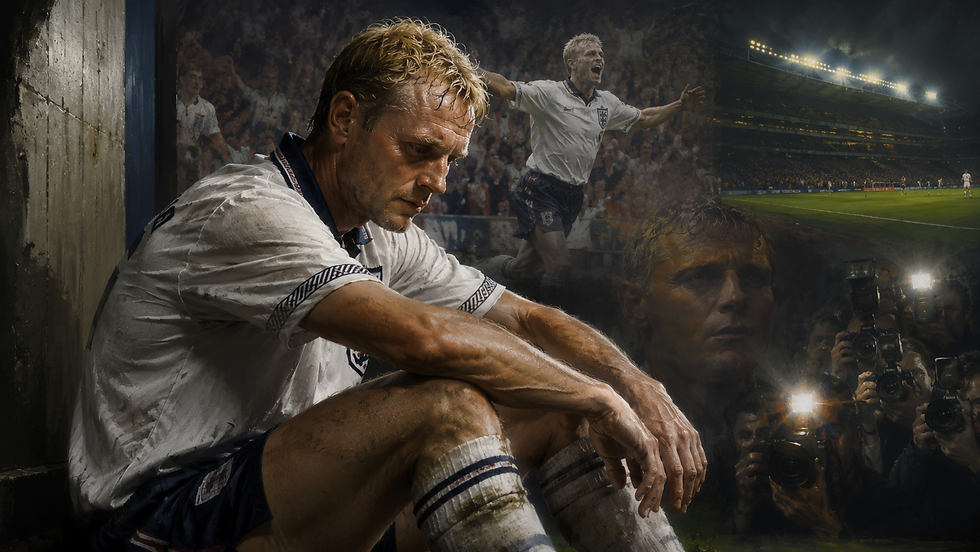
Paul Gascoigne, the legendary English footballer better known as “Gazza,” once shared a strange but revealing story about fame, anxiety, and the power of a name.
According to an article in The Independent, Gascoigne said there was a period when he dreaded hearing the news. His life had become so heavily covered by the British press that he feared almost any headline might be about him. The anxiety became so intense that when he heard broadcasters say “Gaza” on the news, he briefly panicked, thinking they were saying “Gazza.”
Of course, Gaza and Gazza are very different things.
Gazza was one of the most gifted and charismatic footballers of his generation, famous for his creativity, emotion, and unforgettable performances for England. Gaza, by contrast, is a small coastal territory bordering Israel, Egypt, and the Mediterranean Sea. It has been at the center of one of the world’s most painful and long-running conflicts, involving Israelis, Palestinians, Hamas, the Israeli government, and the Israel Defense Forces, known as the IDF.
For Israelis, Gaza is not an abstract headline. It is a place connected to real security fears, wars, rocket fire, hostage crises, military operations, and soldiers sent into dangerous situations. For Palestinians living in Gaza, it is home, and also a place marked by hardship, destruction, political control by Hamas, and repeated rounds of violence. For IDF soldiers and their families, news about Gaza can mean immediate concern: where a unit is operating, whether friends are safe, and whether the country is moving closer to or further from war.
That is what makes Gascoigne’s comment so striking. He was not making a political statement about the Middle East. He was describing how deeply personal distress can distort the way a person hears the world. A word that should have referred to a faraway geopolitical crisis instead triggered fear that his own life was once again being picked apart in public.
In a strange way, the story shows two kinds of pressure. One is the pressure of celebrity, where a person can feel hunted by headlines. The other is the pressure of conflict, where words like Gaza carry life-and-death meaning for millions of people, including civilians and soldiers.
Gascoigne’s story is memorable because it is almost absurd on the surface: Gaza, Gazza, one letter apart. But underneath it is something more serious. The news is never just “the news” to everyone. Sometimes it is about a footballer’s fear of public shame. Sometimes it is about a soldier’s safety. Sometimes it is about families on both sides waiting for the next update.
A single word can carry a lot of weight.


Comments